 Arcwoven
 GUIDE Architecture from code
Software architecture diagrams from code: a reviewable, evidence-backed approach
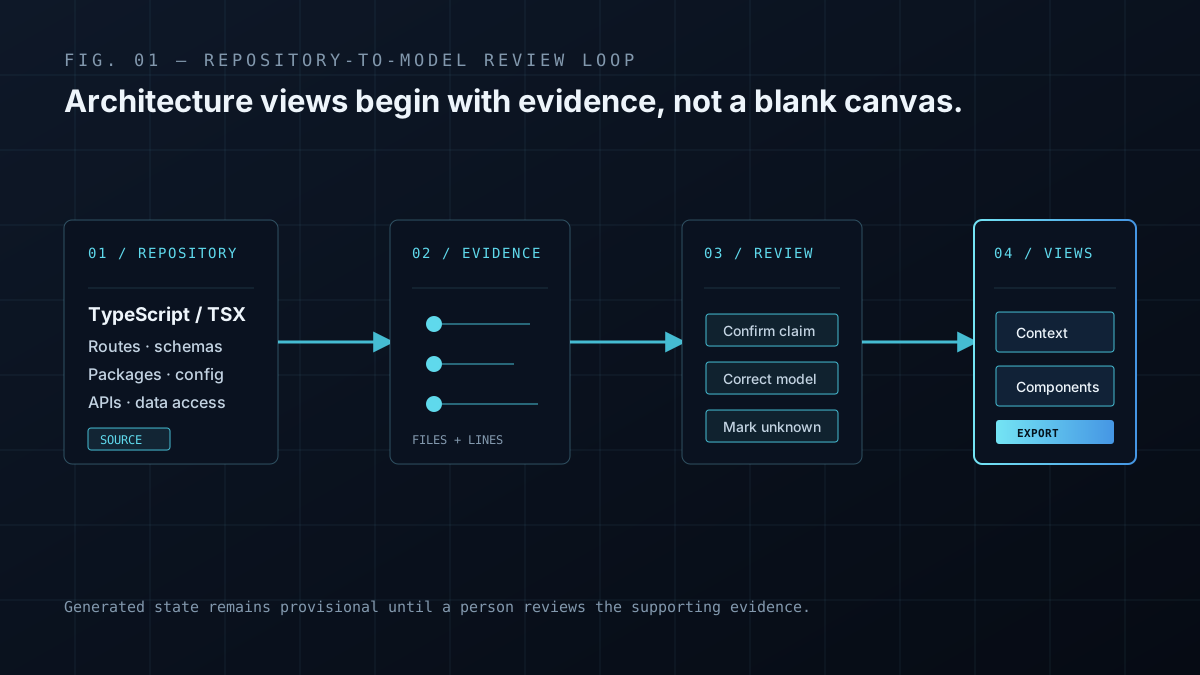
Generating a software architecture diagram from code is useful only when the boxes and arrows can be checked against the system that actually exists. The goal is not a polished picture produced in one click. It is a reviewable architecture model whose diagrams remain connected to source evidence.
Arcwoven is currently in public beta. Repository analysis is a TypeScript/TSX, Node, and React pilot, and accepts public GitHub repositories today. Generated model state is provisional until a person reviews it.
What a useful software architecture diagram should answer
A diagram is valuable when it helps a reader answer concrete questions about a system: where its boundary sits, which services or applications are inside it, which outside systems it depends on, how data moves, and where state is stored. A single repository may need more than one view because executives, developers, operators, and systems engineers work at different levels of detail.
The official C4 model, for example, separates software architecture into system-context, container, component, and code views. It also notes that teams do not need every level; context and container diagrams are enough for many software teams. The important principle is controlled zoom, not drawing every class in the repository.
Why deriving the model from code is a better starting point
Hand-drawn diagrams begin with memory and interviews. That can capture intent, but it also creates an artifact that immediately starts drifting as implementation changes. Source-derived architecture begins with evidence already present in the repository:
- entry points, routes, schemas, and interface definitions;
- package and module relationships;
- deployment manifests and runtime configuration;
- database clients, migrations, queues, and caches;
- framework conventions that reveal application boundaries.
That evidence does not reveal everything. A repository may omit business intent, production topology, manually configured infrastructure, or external processes. Source analysis should therefore produce a starting model with explicit evidence and uncertainty, not claim complete knowledge of the system.
Diagram generator versus evidence-backed model
A practical repository-to-diagram workflow
- Define the system boundary. Decide which repository and deployed system the diagram is intended to describe.
- Collect machine-readable evidence. Analyze source, configuration, manifests, schemas, and documentation together rather than relying on filenames alone.
- Build a model before drawing a view. Represent boundaries, services, APIs, stores, and dependencies as structured elements with evidence attached.
- Choose the audience and zoom level. Produce a context view for the big picture and more detailed service or component views only where they add value.
- Review every important claim. Open the cited source, correct wrong inferences, and mark unknowns instead of hiding them behind confident labels.
- Export after review. Treat the reviewed model as the source for diagrams and documents, not the first generated picture as the final artifact.
How Arcwoven applies this approach
Arcwoven imports a public GitHub repository into a private workspace and derives a model of system boundaries, services, APIs, data stores, dependencies, and implementation details. Each element carries the repository evidence behind it so a reviewer can inspect the claim before trusting it.
The automated result is deliberately provisional. An engineer reviews the evidence, accepts what is supported, and corrects or rejects what is not. Model derivation and review are available with a free account; exporting diagrams, documents, HTML, and SysML v2 is a Pro feature.
Current beta scope and limits
- Supported pilot: TypeScript/TSX, Node, and React.
- Repository access: public GitHub repositories only.
- Free-account limits: 2 imports per day, 6 per week, and 10 per month.
- Private repositories: not generally available; contact support@arcwoven.ai about the private pilot.
- Authority: generated outputs may be incomplete or wrong until reviewed.
Arcwoven is not affiliated with, sponsored by, or endorsed by GitHub. GitHub is a trademark of GitHub, Inc.
Derive a model from your repository
If your public repository uses TypeScript, Node, or React, create a free account and review the architecture Arcwoven derives from its source evidence.
Related guides
FAQ
Can an architecture diagram be generated from source code?
Source analysis can derive a useful starting view of boundaries, services, APIs, data stores, and dependencies. The result still needs human review because runtime behavior, business intent, and undocumented external systems may not be fully visible in the repo.
What is the difference between an AI diagram generator and an evidence-backed architecture model?
A diagram generator primarily produces a picture. An evidence-backed model keeps each architectural element connected to the files and lines that support it, so an engineer can review and correct the result.
Which repositories can Arcwoven analyze today?
The public beta currently accepts public GitHub repositories in the TypeScript/TSX, Node, and React pilot scope. Other languages are not supported today.
Does a source-derived diagram stay current automatically?
It can be regenerated from current repository evidence, reducing manual reconstruction, but a person should review changes before treating the architecture as trusted.
Can Arcwoven export the reviewed model?
Yes. Exporting diagrams, documents, HTML, and SysML v2 is a Pro feature. Model derivation and review are available with a free account, subject to beta limits.